Showing posts with label elementary school. Show all posts

Monday, March 10, 2014

RAINBOW Fun for St. Patrick's Day

Here on the east coast, the winter has definitely been long. Students in our area missed nearly 3 weeks of school due to snow, ice, wind—you name it. That’s why I am especially looking forward to St. Patrick’s Day this year. The holiday doesn’t always attract much attention. However, with the sea of green from a St. Patty's Parade and the rainbows that signal the end of a storm, St. Patrick’s Day seems to be the perfect holiday to usher in a spring-thinking state of mind.

The post for today deals with the wonders of a rainbow and a quick list of activities that you can use to reinforce math skills as well as color identification.
So, print the printables and have some rainbow fun.

RAINBOW STICKS
This printable is great for teaching color concepts, ordering of sizes, and non-standard measurement (How many red strips long is the table?)

Suggestion: Print the color sticks on card stock. If you decide to use these to teach fact families, cut off the white end of each stick.
RAINBOW BRICK COUNTING STICKS
 
This printable is great for teaching addition basic facts, comparisons, and matching.
Suggestion: Print the color sticks on card stock. If you decide to use these to teach fact families, cut off the white end of each stick to more easily align each stick.

RAINBOW ADDITION
 
Create your own rainbow with pipe cleaners or wax-coated yarn to demonstrate differences in diameter.


If you are looking for a fun story that teaches colors, positional words, and the concept of teamwork to the kiddos, check out the link below to my latest story for children ages 3 through 6.


http://www.amazon.com/When-Violet-was-Blue-Troehler/dp/149612958X/ref=sr_1_1?ie=UTF8&qid=1398776065&sr=8-1&keywords=when+violet+was+blue
Link to Book and eBook on Amazon.com

Most importantly, have some RAINBOW FUN.
Happy St. Patrick’s Day!

This post was shared on the following blog. Please check them out:

The Kennedy Adventures dot Com


Sunday, December 1, 2013

MINTY MATH FOR KINDERGARTEN & FIRST GRADE


Welcome to December—the eternally busy month where it seems as if there are never enough hours in the day, enough hands to do the work, and enough dollars to do it with.
As refreshing as a peppermint, the posts this month will provide activities and ideas for those that are somewhat busy, those that are very busy, and those that are—Are you kidding? When will I ever find the time to do that?! busy. If you are too busy to read this blog, don’t worry— these posts will still be here in January when the whirlwind of December is behind all of us.
If, however, you fit into the first category, take the time to drop a peppermint into your cup of cocoa and check out these ideas to use that winter-fresh candy with the little ones in your life.
Whether they are the real starlight mints and candy canes or the printable versions, these sweet treats provide wonderful opportunities to practice many math skills.
Included below are printables and suggestions for practicing math skills that include counting, single-digit addition, identifying shapes, sorting, non-standard measurement, comparing numbers of objects, sequencing, and more. Created by Rainbows to Snowflakes, this candy cane and starlight mint themed resource will provide ideas and materials to use in math centers, as warm-up activities, and small group practice for kindergarten and first grade.


This post has been shared on the following blogs. Please check them out:

Something 2 Offer dot Com

ABC Creative Learning dot Com

Enchanted Homeschooling dot Org


Monday, October 7, 2013

CANDY CORN or CORNY DUCKS~HOW TO FIND THE RIGHT BALANCE


Whether you teach in a public school, a private school, or homeschool, one of the challenges you face is finding the right balance to your educational endeavors. If you drill, drill, and drill some more, your children may tune out and are less likely to retain the valuable information and skills that you address. However, if the day is filled with nothing but fun and games, your children may miss out on practicing skills and internalizing much-needed information. How, then, do you strike that perfect balance?
One way is to involve your students as much as possible in the learning process. As you teach, keep communication lines open. Ask questions and answer their questions. Discuss how the skills they are practicing and the knowledge they are acquiring will transfer to other areas.
If we as educators begin this technique with children at a young age and provide meaningful lessons and activities, then our efforts will help raise children that are thinkers, doers, and problem solvers.

In an effort to help find balance, today’s activity will encourage your children to learn concepts and transfer those concepts to real-life situations. In a nutshell (or cornhusk), the activity will encourage your children to think, solve problems, and have fun while doing it.
CANDY CORN OR CORNY DUCKS—HOW TO FIND THE RIGHT BALANCE
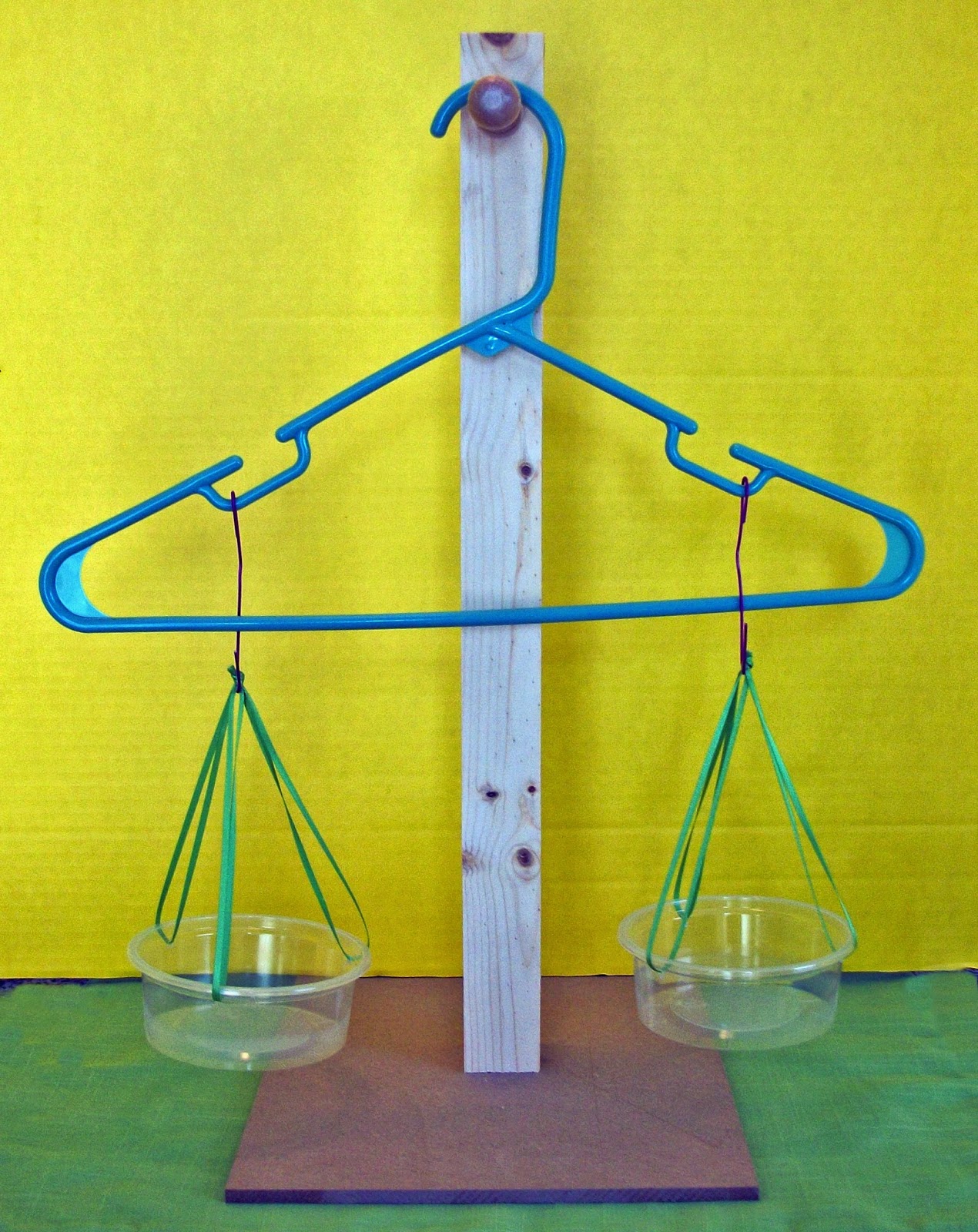
This activity consists of 2 components—creating a balance from household items and using that balance to teach and practice the concept of more and less as well as making predictions.

Grade Range: K – 2
Time to complete: 30-45 minutes
VA STANDARDS of LEARNING: Math K.2; K.8; 1.9
COMMON CORE STATE STANDARDS: CCSS.Math.K.CC.B.5; CCSS.Math.K.CC.A.3; CCSS.Math.2.OA.C.4

ACTIVITY DESCRIPTION: Students will place objects on a balance in order to compare the mass of those objects. They will count the pieces needed to move the balance pivot point to the middle. They will then make predictions on doubling or tripling those items and use the objects to determine if their predictions were correct. Students will then create number sentences to represent their findings.
PLEASE NOTE: The balance created and the balance purchased from an internet source are not devices that present truly accurate readings. They are suitable for demonstrating the concept of more, less, or the same.

MATERIALS:

MATERIALS NEEDED TO CREATE HANGER BALANCE:
Plastic hanger with hook loops
2 clear plastic containers or cups
2 paper clips
Ribbon
Hole puncher
Scissors
Ruler
Fiber board base: 2 x 2 piece of wood, hat hanger dowel, nails (OR hang the balance on a
doorknob)*

MATERIALS NEEDED TO COMPLETE THE ACTIVITY:
Set of October-themed objects (rubber ducks used for demonstration)
Candy corn and pumpkins
Small can of corn Pencil
Worksheets (provided)
Balance: Either hanger balance or balance from a retail source


INSTRUCTIONS:
Hint: The creation of the hanger balance can either be conducted as a class project or prior to completing the counting and balancing activity. Due to the small parts of the balance, it is recommended to create the balance prior to the activity for children under the age of 6.

MAKING THE HANGER BALANCE:
For best results, this balance can be used to compare objects that are less than 1 lb. in weight.
1. Using the hole punch, make 3 holes near the top of each plastic container, placing the holes equal distances apart, as shown.

2. Cut 6 lengths of ribbon that are 15 inches long, as shown.
 3. Thread the ribbon through the holes in one of the containers, as shown.

4. Align all 6 ends of the ribbon and tie them into a single knot. This knot will be used to hang the container on the paper clips at each end of the balance.
5. Repeat for the second container.
6. Open both paper clips so that one end is still bent. Bend the straight end over each end of the hanger. 
 *7 Door Knob Pivot Point: If you use a doorknob as the pivot point, your balance is finished. When in use, place the knots of the ribbons onto the paper clips AFTER adding the items to be balanced.

*7. Base Pivot Point:
A. To create the base nail or screw the 12” by 12” fiber board to the end of the 2’ x 2”.
B. Screw the hat hook onto the top of the 2 x 2” leaving approximately 1” as a buffer.

 
HOW MUCH CANDY CORN DOES IS THE SAME AS REAL CORN?

This activity is contains suggested uses for the classroom balance. Modify the instructions to meet the needs of your children.
 
1. Prior to conducting the activity, demonstrate what a balance does and how it works. As this activity involves using candy corn, one suggestion is to divide the class into 2 groups and assign a side of the balance to each group. Then pour a small bag of candy corn into the balance reservoir.
Ask: Do you think this is a fair way to divide the candy corn? How could we do this better without actually counting out ALL of the candy corn?
Then move some of the candy corn into the empty reservoir until the balance pivot point is in the middle.
2. Tell the students that they will use candy corn as a unit of measure to discover how many pieces of candy corn have the same mass (stuff)* as those objects.
A. Place a small can of corn into the balance reservoir.
B. Have the students predict how much candy corn it would take to equal the same mass (stuff) as the can of corn. Count the pieces and place them in front of the balance. Record their prediction.

C. Slowly add the candy corn to the empty reservoir.


D. If their prediction was too low, add more candy corn one-at-a-time until the reservoirs are the same level. If their prediction was too high, remove the candy corn one-at-a-time until the reservoirs are balanced. Record the final count.
3. Repeat the process using candy pumpkins and candy corn, rubber ducks and candy corn, etc.

 4. Extend the learning: This activity is great for addressing multiplication, counting on, ratios, etc.


TRANSFER THOSE SKILLS WITH BALANCE ON THE PLAYGROUND: If you are lucky enough to have access to a see saw, then apply the skills approached in the activity to balancing students. This is a great opportunity to springboard into a discussion of simple machines.


OR...
POST A COMMENT ON THIS BLOG**

*This giveaway will include the balance shown above for parents and teachers of children over the age of 4. The registration will last from the posting of this blog post until midnight, October 20, 2013. One winner will be randomly selected from the entries. The balance will be shipped from Amazon within approximately 2 weeks following the close of the giveaway. The giveaway is open to residents of the United States with a United State’s mailing address. The winner’s name will be posted on the blog, unless the winner chooses not to have his/her name posted.
**To be considered for entry into this giveaway, the entrant’s email address must be submitted to the blog administrator.

THIS POST HAS BEEN SHARED ON THE FOLLOWING BLOGS. PLEASE CHECK THEM OUT:

Kids Activities Blog dot Com

The Mom Maven dot Com

The HomeSchool Village dot Com

No Time for Flash Cards dot Com


BALANCE GIVEAWAY UPDATE, OCT. 21, 2013:

Congratulations to Berdine from FL, the winner of the balance and educational treat. I hope your little ones have fun with them.

Thank you to all that entered this giveaway. Please check back in early November for a very special giveaway.


Monday, September 23, 2013

ADVENTURES at WALNUT GROVE: BOOK REVIEW & GIVEAWAY


Short, tall, brown hair, red hair—we all look different in one way or another. Early in life, infants quickly learn to recognize their parents by looking at their faces and hearing their voices. Our differences, both inside and outside, are what make us unique. However, sometimes the differences between us become not only a symbol of our originality but also a misguided opportunity for teasing or ridicule. Adventures at Walnut Grove, by Dana Lehman and Judy Lehman, provides parents and educators a wonderful opportunity to approach the delicate subject of teasing.

Lehman's story unfolds in a setting inviting to any child—a summer resort filled with friendship and fun. As many of us know, summer vacations can provide laughter, create fond memories, and help us to develop lifelong friendships. Lehman's story presents the reader with the all the excitement and adventure one would expect from a fun-filled resort vacation—from wonderful games of softball (walnut ball) to the friendly competition of swimming races.
At the other end of the spectrum, however, many of us can also relate to the moment when all the fun is washed away by tears brought on by an unkind word. Sammy Squirrel, the main character, experiences this sadness when a newcomer to Walnut Grove makes fun of his appearance. Sammy cries, but does not lash out at Bucky, thus presenting the first of Lehman's timeless lessons.
As the story progresses, Lehman continues to communicate to the reader how teasing effects everyone. Bucky, the beaver that teased Sammy, learns a valuable lesson in empathy when the teaser becomes the teased. This turn of events provides parents with a great opportunity to find teachable moments in their child's life. Usually, when one child teases another, there is a reason behind the unkind act. In Bucky's case, he didn't mean any harm when he made fun of Sammy; he merely wanted Sammy to strike out while he was at bat in the game of walnut ball. When Bucky is teased by another character in the story, Lehman guides the reader through the best way to solve the problem.
In the end, the animals are once again great friends enjoying their time together in Walnut Grove.
Adventures at Walnut Grove is a delightful story that is beautifully enhanced by watercolor illustrations.
 

THE DETAILS:
Total Word Count: 878
Average word count per 2-page spread: 68
Extra Value: Provides valuable lesson on empathy and a reminder not to tease others

Dana Lehman’s series of books based on Walnut Grove can be found on Amazon and her website. Please check out the other exciting stories that take place in Walnut Grove.

The activities that I created to accompany this book are a terrific way to reinforce the skills of identifying differences in others and celebrating those differences.
EACH OF US IS BEAUTIFULLY DIFFERENT
ACTIVITY DESCRIPTION: Students will sort animal cards by a specified attribute. They will then select animals from at least two categories to create a new animal. They will create a verbal description of the newly created animal.
Grade Range: K-2nd
Time to complete: 30-45 minutes

Materials:
Animal cards
Note cards with categories
Crayons, markers, watercolors, or colored pencils
Paper
Instructions:
1. Conduct a classroom discussion based on the following introduction—

Try to imagine a world where everything is the same. What if you had to eat the same food for breakfast, lunch and dinner every day? What if everyone had the same type of pets? Bikes? Houses? Toys? Etc. Now try to imagine a world that is filled with variety. How would that world be different? Which world would you like to live in? Why?
2. Flip through the animals cards and discuss how the animals are different. (Size, shape, color, number of legs, type of skin, etc.)

3. Sort the animals by various attributes,  similar to the categories shown below.

 
4. Students will then choose 1 animal from each of the categories and create their own unique animal. They will then name their animal.


5. Write or verbally create a description of that animal.

The artwork for the Snabbit and Butterdog were generously created by Ali from Florida.

ARE YOU A SQUIRREL, A BEAVER, OR A LITTLE BIT OF BOTH—A SQUEAVER?
 
This activity addresses not only the skills of positively identifying our individualities, but it also provides a way to embrace those differences. It hurts when someone calls us names. By creating a unique animal based on individual preferences, and giving the animal a special name, this activity provides a gentle way to deal with teasing by others.
True Story: There was once a child that loved collecting rocks. He often came home from school with his pockets loaded with rocks of every shape, size, and color. Sadly, the boy was teased and called ‘Rocks and Minerals’. He was sad that his friends and classmates made fun of him because of his hobby. The boy had a wonderful science teacher that encouraged his passion for discovery and realized that her student was as unique as the rocks he collected.
When that boy grew up he went on a rock and fossil hunt near the Chesapeake Bay. While there, he discovered a rare type of whale fossil. That fossil, a whale from the Miocene era, now resides in a museum in Maryland.
ACTIVITY DESCRIPTION: Students will create an animal based on their personal preferences. They will then use that animal to compare with the animals created by others in the class.
Grade Range: 1-4
Time to complete: 30-45 minutes

Materials:
Animal Printouts (provided)
Crayons, markers, or colored pencils
Glue
Scissors
Paper

Instructions:
1. Prior to the activity, prepare an animal glyph based on your choices for the animal components.
Ask: Looking at the animal I created, and the key, what do you think is my favorite outdoor fun? Indoor fun? Helping fun?

Explain that the students are going to create their own animal, based on their favorite things to do.
2. Show the key to the students. Discuss the options for each category.


3. Give the animal printout and the key to the students.
 
4. Students will cut out the animal components based on their choices. They will then glue them to paper to create a unique animal

5. For the section entitled Indoor fun, instruct the students to draw their favorite item, cut it out, and add it to the paws of their animal. This addition will make their animal creations TRULY unique.
6. When the animal glyphs are completed, student will share their choices in small groups.
Hint: You can mix up the groups by having them find classmates with some similarities, some differences, or all differences. This is a wonderful opportunity to help select students for classroom chores.

OR...

*This giveaway will include a free copy of Adventures at Walnut Grove (Dana Lehman & Judy Lehman), as well as a $10 gift card for a future Amazon purchase. The registration will last from the posting of this blog post until midnight, October 7, 2013. One winner will be randomly selected from the entries. The books and treat will be shipped from Amazon within approximately 2 weeks following the close of the giveaway. The giveaway is open to residents of the United States with a United State’s mailing address. The winner’s name will be posted on the blog, unless the winner chooses not to have his/her name posted. To be considered for entry into this giveaway, the entrant’s email address must be submitted to the blog administrator.
 

This post was linked to the following blogs. Please check them out:

Mother Daughter Book Reviews dot Com

Kids Activities Blog dot Com

Living and Learning at Home dot Com

I Can Teach My Child dot Com

The Mom Maven dot Com

GIVEAWAY UPDATE 10-8-2013:

Congrats to the winners of the book and Amazon gift card: Amy, April, and William.

I will post the final winner's name when I receive confirmation from that winner.

Thank you to all of the entrants to this giveaway.


Wednesday, August 21, 2013

PUT ON YOUR THINKING CAPS

In a time when budgets are trimmed, dollars are stretched, and educators are forever expected to do more with less, sometimes it helps to tap into free resources to add to your curriculum materials.

Today’s post is not actually an activity—the post is how to use a FREE resource to teach and reinforce many concepts in your classroom. With a little help from your students, you can quickly fill a tub with these handy dandy manipulatives and therefore have the materials necessary for countless center ideas.
 
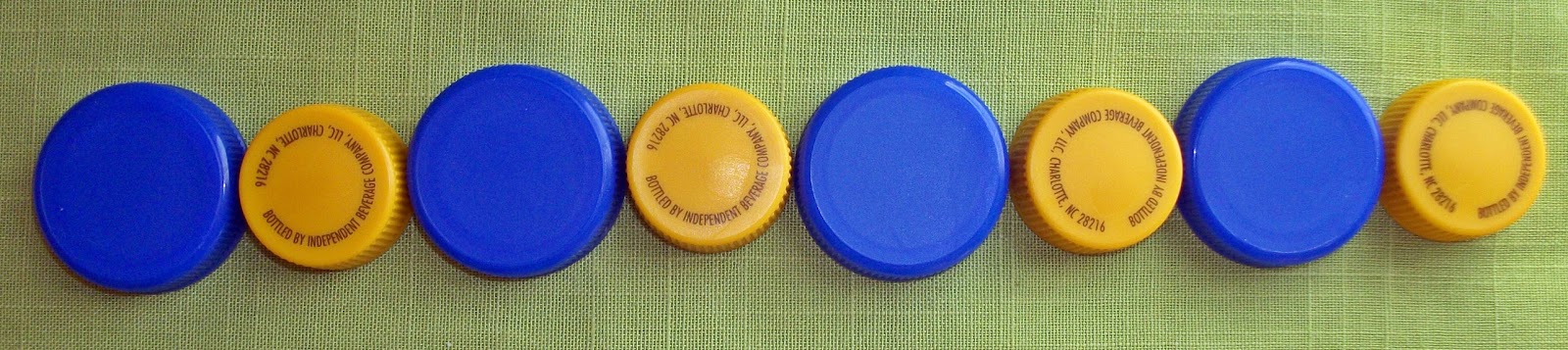
This resource of simple lids saved from common household objects can be used to teach many concepts at the preschool and primary levels. These activities can be used in a guided lesson or as a center activity.

MATERIALS:
Assorted plastic caps in multiple colors and sizes
Printout shown (optional)
 
INSTRUCTIONS:
1. Prior to using the tub of caps, assign your students the task of collecting clean plastic lids from home.
2. Create printouts of image provided to accompany the tub of caps.
3. Put on your own thinking cap and see how many ways you can use this FREE resource with your children. Here are just a few of the possibilities:
COLOR SORTING
COMPARING BY SIZE
ORDERING BY SIZE
IDENTIFYING ORDINALS
CREATING AND EXTENDING PATTERNS
CREATING NUMBER SENTENCES
PRACTICING FINE MOTOR SKILLS
SORTING BY SHAPE 
 
What concepts can you teach with this resource? 
 

This post was linked to: (Please check out her blog)

SeeSavannaCraft dot com