Showing posts with label preschool. Show all posts

Thursday, April 3, 2014

Spring, Bunnies, Rainbows, & Easter~What Could Be Better?

I can happily report that spring has definitely arrived on the mid-Atlantic coast. Signs of spring are everywhere—from the bluebirds that are busily creating their nests, to the flowers popping up from the still-frosty ground, to the trees that look as if their branches are ready to burst. Spring is my favorite season, ushering in the opportunities to renew just about everything.

For Quiet Bunny, the adorable creation by Lisa McCue, the same is true. Quiet Bunny loves spring. And, as Easter falls this month, I decided to offer a review of Quiet Bunny’s Many Colors—a book perfect for spring AND Easter!
QUIET BUNNY’S MANY COLORS by Lisa McCue
From yellow to green and from blue to red—Quiet Bunny loves all of the colors of spring. Yet, poor Quiet Bunny becomes sad when he thinks that his brown and white fur is not a color of the season that he loves so much.

Quiet Bunny sets out on a mission to become one-with-spring by adorning himself with nature’s offerings of the season.
He tries dandelions.
He tries lily pads.
Quiet Bunny even tries a good coating of red clay.
Nothing works.

Just about the time that Quiet Bunny is ready to give up a wise owl steps in and helps Quiet Bunny realize that he is indeed the color of spring!
In Quiet Bunny’s Many Colors, Lisa McCue, author and illustrator, presents a heartwarming tale of acceptance of oneself. With vivid splashes of color, McCue’s illustrations will definitely create a lasting memory of this very important message. Her clever way of transitioning from one event to the next also provides an opportunity to discuss sequencing and story plots.
As an added bonus, McCue tucks little surprises on each brightly colored two page spread that will encourage children to explore the world around them. Children will delight in finding each plant and animal that represents the color that Quiet Bunny is attempting to mimic.

Bunnies, nature, bright colors, and acceptance of our many differences—Quiet Bunny’s Many Colors is the perfect way to usher in the season of new beginnings.

Word Count: 609
Average words per page: 20
Recommended Age: 3-6-years-old

Added bonus: Great for color recognition, identifying items from nature, and lessons on acceptance, FABULOUS illustrations!


Click here for a link to Lisa McCue's story-Quiet Bunny's Many Colors


Fun Printables to Teach Color Recognition and Sequencing


If you are seeking additional resources to teach and reinforce color recognition, my newest book When Violet was Blue, available as an ebook on Amazon can easily fit the bill. The simple drawings and bouncy tale will help your little ones learn and remember the colors of the rainbow.
The image below will lead you to a link of the ebook. This book even features the text-to-speech option so that your little ones can ‘read’ the story all by themselves.
 
http://www.amazon.com/When-Violet-Was-Blue-Troehler-ebook/dp/B00JAN76PK/ref=sr_1_1?ie=UTF8&qid=1396529609&sr=8-1&keywords=when+violet+was+blue
Link to ebook on Amazon


Monday, November 11, 2013

PUT ON YOUR THINKING CAPS WITH HANDS-ON LEARNING


Today is all about my favorite veteran, my sailor husband. I am thankful for the time and devotion that so many who have proudly served our country gave to protect our freedoms and our loved ones.
Therefore, my post today is an early rendition of Thanksgiving leftovers. I am reposting an earlier post for preschool through first grade with a link to a free printable PDF.
THANK YOU TO ALL THAT HAVE SERVED OUR COUNTRY.
In a time when budgets are trimmed, dollars are stretched, and educators are forever expected to do more with less, sometimes it helps to tap into free resources to add to your curriculum materials.


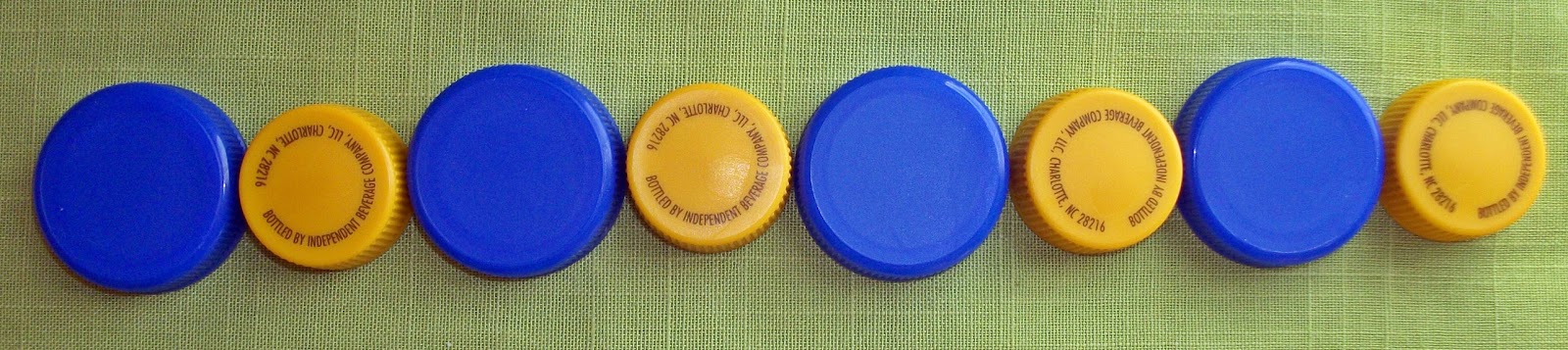
Today’s post is not actually an activity—the post is how to use a FREE resource to teach and reinforce many concepts in your classroom. With a little help from your students, you can quickly fill a tub with these handy dandy manipulatives and therefore have the materials necessary for countless center ideas.
This resource of simple lids saved from common household objects can be used to teach many concepts at the preschool and primary levels. These activities can be used in a guided lesson or as a center activity.

MATERIALS:
Assorted plastic caps in multiple colors and sizes
Printout shown (optional)
 

LINK TO FREE PDF ON TEACHERS PAY TEACHERS


INSTRUCTIONS:
1. Prior to using the tub of caps, assign your students the task of collecting clean plastic lids from home.
2. Create printouts of image provided to accompany the tub of caps.
3. Put on your own thinking cap and see how many ways you can use this FREE resource with your children. Here are just a few of the possibilities:
COLOR SORTING
COMPARING BY SIZE
ORDERING BY SIZE
IDENTIFYING ORDINALS
CREATING AND EXTENDING PATTERNS
CREATING NUMBER SENTENCES
PRACTICING FINE MOTOR SKILLS
SORTING BY SHAPE

What concepts can you teach with this resource?

This post has been shared on the following blogs. Please check them out:

Living Well Spending Less dot Com


Monday, October 14, 2013

TRICK-OR-TREAT PATTERNS and a HALLOWEEN POEM~It MUST be October

 
The month of October is nearly halfway behind us.
The leaves are beginning to fall.
The yards in our neighborhood are decorated with everything that’s orange, black, and white.
In a word—they are BOO-tiful.
These signs all point to the fact that Halloween is almost upon us.
Today’s offerings tap into the October preparations with no introduction necessary.
So—print out the images and have some Halloween fun with the kids.
 

THIS POST HAS BEEN SHARED ON THE FOLLOWING BLOGS. PLEASE CHECK THEM OUT:

Homeschool Creations dot Net

The Educators Spin on It dot Com

Thursday, October 10, 2013

CREEPY BUG & DUCK MATCH: TACTILE DISCRIMINATION FUN


Oh No! Bugs have crawled into the candy pumpkin pail.
Whatever shall we do?
Are you brave enough to find the bugs in the pumpkin pail?
If you have little ones between the ages of 3 and 6, this activity is perfect to practice tactile discrimination and have fun while doing so. Very little preparation is needed and the supplies are quite inexpensive—which makes for a quick rainy October day indoor activity.
Creepy Bug and Halloween Duck Match
Activity Description: Children will describe bugs or ducks by their physical attributes. They will close their eyes to feel the differences in each item. They will then find the match to the bug or duck that has been placed into the jack-o-lantern.
Age Range: 3-6
Time to complete: 20-30 minutes
MATERIALS:
Plastic pumpkin (jack-o-lantern)
Set of ducks or plastic bugs
Scissors
Glue gun and glue sticks
Paper
Rubber shelf liner, silicone mat, or thick cardstock


INSTRUCTIONS:
1. Prior to conducting the activity, create the covered pumpkin.
A. Trace the top of the pumpkin onto white paper. Cut out the traced circle to use as a template.
 
B. Use the white circle template to cut a circle out of the rubber shelf liner, making the circle about 1/16” larger to assure coverage.
 
C. Fold the circle in half and cut 2 lines that are large enough to fit the children’s hands, bugs, and ducks through the hole.

 
D. Glue the rubber circle to the top of the pumpkin with the glue gun.
2. Place the bugs in front of the children.
3.Discuss how the bugs look different (other than color).
4. Ask the children to close their eyes and describe the bugs.
*5. Optional Modification: For younger children, conduct a practice sort:
A. Place 2 sets of bugs in front of them, ask them to close their eyes and by touch alone, find the bugs that are the same shape.
B. Repeat until all sets of bugs are included.
6. Place one set of the bugs into the pumpkin. Place the other set in front of the pumpkin.

7. Take turns selecting a bug, reaching into the pumpkin, and identifying the match to the bug.

8. Repeat with the Halloween Ducks.

This post has been shared on the following blogs. Please check them out:

Enchanted Homeschooling Mom dot Org

Sun Scholars dot Com

Thursday, September 26, 2013

GETTING READY FOR A VERY CORNY MONTH IN OCTOBER


October and corn naturally go together. With that trend in mind, today’s post will be a teaser for the month ahead. On this blog, October will definitely be a month full of treats—no tricks will be seen here.

To get your creative juices flowing, as well as your little ones thinking, I’m posting a quick and easy-to-do sort and match activity based on October-themed manipulatives. 


Please check this blog in October for a treat bag full of ideas, printables, giveaways, and more.

Be sure to waddle back in October for MORE manipulative fun.

Tuesday, September 3, 2013

SYMMETRY: Balance in Nature, Balance in Education


SYMMETRY: Balance In Nature & Education
Butterflies: Nature's Ultimate Example of Symmetry
With cooler days ahead, it’s only natural that kids want to head outdoors for exploration. Today’s activity taps into children’s natural curiosity by striking a balance between building skills, adding to a child’s knowledge base, and having lots of fun while doing so.
Teaching the concept of symmetry can begin at any age. As soon as a toddler is able to walk, he taps into his own natural symmetry to navigate his environment. As a parent or teacher, you can use that awareness to help your child make connections to symmetry in the world around him.
Age Range: 4 to 7
Time to complete: 45-60 minutes
Subjects/Skills Addressed: science, math, physical education, fine motor skills
ACTIVITY DESCRIPTION: Children will use their reflections in a mirror to build understanding of bilateral symmetry. They will then gather leaves and use those leaves to identify lines of symmetry.

*Please note: For the purpose of this activity, when the term symmetry is used, it refers to bilateral or reflective symmetry.
MATERIALS:
Full length mirror
Removable painting tape
Symmetry stick (straw or other straight object that can be used to visually divide a leaf or flower.
Leaves of various shapes
Crayons
Scissors
Construction paper

INSTRUCTIONS:

1. Prior to completing the activity, place a vertical strip of green tape on the mirror that is a bit longer than your child’s height.
2. Have your child stand in front of the mirror so that he is visually divided in half by the tape.
3. Practice standing in various positions with both feet on the floor, keeping his head and arms balanced. Point out that each side of his reflection looks the same.
Ask: Is it easy to stand in one place when you look the same on both sides of the green tape? What do you think will happen if that changes?
4. Have your child raise his foot slightly. Then raise it higher.
Ask: Is it still as easy to stand in one place? Why do you think it takes more work to stand with only one foot?
5. Practice hopping on two feet and hopping on one foot.
Ask: Is it easier to hop on one foot or on two feet? Why?
6. Explain that when objects are balanced (have symmetry), they are able to stand better without falling. The same is true in nature.

Symmetry*: When you draw a line down the middle of something and both sides look the same, as if they are a mirrored reflection of each other.
7. Go on a nature walk to collect leaves and look at tree trunks. As you collect the leaves, use the symmetry stick to visually divide the leaves to see if they have symmetry. While many trees have leaves that are mainly symmetrical, there are trees with leaves that are naturally asymmetrical. Refer to the photos for examples of each.


8. Sort the leaves by whether they are or are not symmetrical. How many of each type are there?
 
AFTER THE NATURE WALK:

1. Use construction paper to create your own special type of Symme-Tree. Fold construction paper in half and cut free-form leaf shapes. This is not only a great way to practice fine motor skills, but it also reinforces the concept of lines of symmetry when the paper is folded and cut.


 2. Use the leaves that were gathered to create leaf prints by placing a leaf under a piece of paper and rubbing with the edge of a crayon. Once the rubbing has been created, use another crayon to draw the line of symmetry.

Another connection: Use wooden blocks to create towers that are balanced and towers that are not balanced. Which type of tower can be built higher? Count the number of blocks of each type of tower built.

Wednesday, August 21, 2013

PUT ON YOUR THINKING CAPS

In a time when budgets are trimmed, dollars are stretched, and educators are forever expected to do more with less, sometimes it helps to tap into free resources to add to your curriculum materials.

Today’s post is not actually an activity—the post is how to use a FREE resource to teach and reinforce many concepts in your classroom. With a little help from your students, you can quickly fill a tub with these handy dandy manipulatives and therefore have the materials necessary for countless center ideas.
 
This resource of simple lids saved from common household objects can be used to teach many concepts at the preschool and primary levels. These activities can be used in a guided lesson or as a center activity.

MATERIALS:
Assorted plastic caps in multiple colors and sizes
Printout shown (optional)
 
INSTRUCTIONS:
1. Prior to using the tub of caps, assign your students the task of collecting clean plastic lids from home.
2. Create printouts of image provided to accompany the tub of caps.
3. Put on your own thinking cap and see how many ways you can use this FREE resource with your children. Here are just a few of the possibilities:
COLOR SORTING
COMPARING BY SIZE
ORDERING BY SIZE
IDENTIFYING ORDINALS
CREATING AND EXTENDING PATTERNS
CREATING NUMBER SENTENCES
PRACTICING FINE MOTOR SKILLS
SORTING BY SHAPE 
 
What concepts can you teach with this resource? 
 

This post was linked to: (Please check out her blog)

SeeSavannaCraft dot com