Showing posts with label sorting. Show all posts

Monday, November 11, 2013

PUT ON YOUR THINKING CAPS WITH HANDS-ON LEARNING


Today is all about my favorite veteran, my sailor husband. I am thankful for the time and devotion that so many who have proudly served our country gave to protect our freedoms and our loved ones.
Therefore, my post today is an early rendition of Thanksgiving leftovers. I am reposting an earlier post for preschool through first grade with a link to a free printable PDF.
THANK YOU TO ALL THAT HAVE SERVED OUR COUNTRY.
In a time when budgets are trimmed, dollars are stretched, and educators are forever expected to do more with less, sometimes it helps to tap into free resources to add to your curriculum materials.


Today’s post is not actually an activity—the post is how to use a FREE resource to teach and reinforce many concepts in your classroom. With a little help from your students, you can quickly fill a tub with these handy dandy manipulatives and therefore have the materials necessary for countless center ideas.
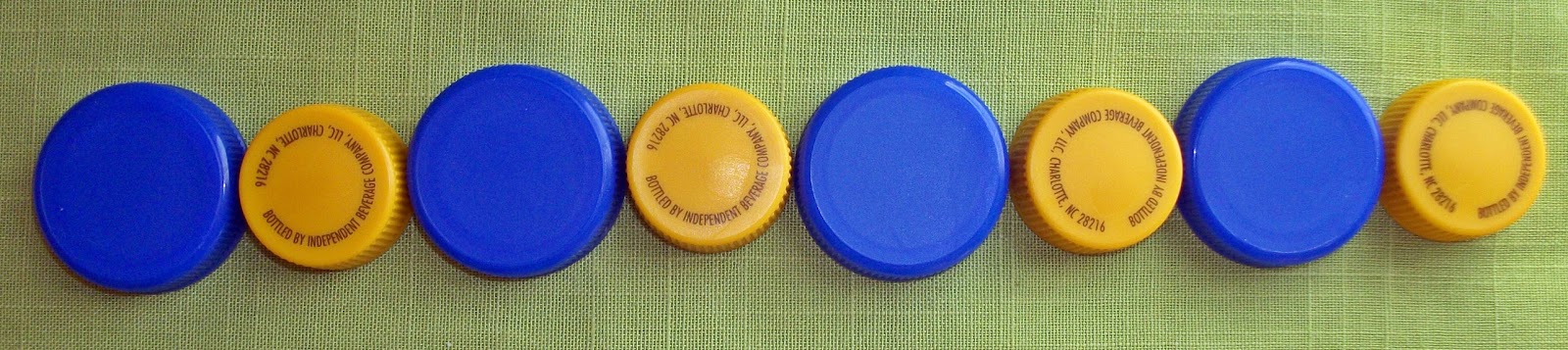
This resource of simple lids saved from common household objects can be used to teach many concepts at the preschool and primary levels. These activities can be used in a guided lesson or as a center activity.

MATERIALS:
Assorted plastic caps in multiple colors and sizes
Printout shown (optional)
 

LINK TO FREE PDF ON TEACHERS PAY TEACHERS


INSTRUCTIONS:
1. Prior to using the tub of caps, assign your students the task of collecting clean plastic lids from home.
2. Create printouts of image provided to accompany the tub of caps.
3. Put on your own thinking cap and see how many ways you can use this FREE resource with your children. Here are just a few of the possibilities:
COLOR SORTING
COMPARING BY SIZE
ORDERING BY SIZE
IDENTIFYING ORDINALS
CREATING AND EXTENDING PATTERNS
CREATING NUMBER SENTENCES
PRACTICING FINE MOTOR SKILLS
SORTING BY SHAPE

What concepts can you teach with this resource?

This post has been shared on the following blogs. Please check them out:

Living Well Spending Less dot Com


Thursday, October 10, 2013

CREEPY BUG & DUCK MATCH: TACTILE DISCRIMINATION FUN


Oh No! Bugs have crawled into the candy pumpkin pail.
Whatever shall we do?
Are you brave enough to find the bugs in the pumpkin pail?
If you have little ones between the ages of 3 and 6, this activity is perfect to practice tactile discrimination and have fun while doing so. Very little preparation is needed and the supplies are quite inexpensive—which makes for a quick rainy October day indoor activity.
Creepy Bug and Halloween Duck Match
Activity Description: Children will describe bugs or ducks by their physical attributes. They will close their eyes to feel the differences in each item. They will then find the match to the bug or duck that has been placed into the jack-o-lantern.
Age Range: 3-6
Time to complete: 20-30 minutes
MATERIALS:
Plastic pumpkin (jack-o-lantern)
Set of ducks or plastic bugs
Scissors
Glue gun and glue sticks
Paper
Rubber shelf liner, silicone mat, or thick cardstock


INSTRUCTIONS:
1. Prior to conducting the activity, create the covered pumpkin.
A. Trace the top of the pumpkin onto white paper. Cut out the traced circle to use as a template.
 
B. Use the white circle template to cut a circle out of the rubber shelf liner, making the circle about 1/16” larger to assure coverage.
 
C. Fold the circle in half and cut 2 lines that are large enough to fit the children’s hands, bugs, and ducks through the hole.

 
D. Glue the rubber circle to the top of the pumpkin with the glue gun.
2. Place the bugs in front of the children.
3.Discuss how the bugs look different (other than color).
4. Ask the children to close their eyes and describe the bugs.
*5. Optional Modification: For younger children, conduct a practice sort:
A. Place 2 sets of bugs in front of them, ask them to close their eyes and by touch alone, find the bugs that are the same shape.
B. Repeat until all sets of bugs are included.
6. Place one set of the bugs into the pumpkin. Place the other set in front of the pumpkin.

7. Take turns selecting a bug, reaching into the pumpkin, and identifying the match to the bug.

8. Repeat with the Halloween Ducks.

This post has been shared on the following blogs. Please check them out:

Enchanted Homeschooling Mom dot Org

Sun Scholars dot Com

Monday, September 23, 2013

ADVENTURES at WALNUT GROVE: BOOK REVIEW & GIVEAWAY


Short, tall, brown hair, red hair—we all look different in one way or another. Early in life, infants quickly learn to recognize their parents by looking at their faces and hearing their voices. Our differences, both inside and outside, are what make us unique. However, sometimes the differences between us become not only a symbol of our originality but also a misguided opportunity for teasing or ridicule. Adventures at Walnut Grove, by Dana Lehman and Judy Lehman, provides parents and educators a wonderful opportunity to approach the delicate subject of teasing.

Lehman's story unfolds in a setting inviting to any child—a summer resort filled with friendship and fun. As many of us know, summer vacations can provide laughter, create fond memories, and help us to develop lifelong friendships. Lehman's story presents the reader with the all the excitement and adventure one would expect from a fun-filled resort vacation—from wonderful games of softball (walnut ball) to the friendly competition of swimming races.
At the other end of the spectrum, however, many of us can also relate to the moment when all the fun is washed away by tears brought on by an unkind word. Sammy Squirrel, the main character, experiences this sadness when a newcomer to Walnut Grove makes fun of his appearance. Sammy cries, but does not lash out at Bucky, thus presenting the first of Lehman's timeless lessons.
As the story progresses, Lehman continues to communicate to the reader how teasing effects everyone. Bucky, the beaver that teased Sammy, learns a valuable lesson in empathy when the teaser becomes the teased. This turn of events provides parents with a great opportunity to find teachable moments in their child's life. Usually, when one child teases another, there is a reason behind the unkind act. In Bucky's case, he didn't mean any harm when he made fun of Sammy; he merely wanted Sammy to strike out while he was at bat in the game of walnut ball. When Bucky is teased by another character in the story, Lehman guides the reader through the best way to solve the problem.
In the end, the animals are once again great friends enjoying their time together in Walnut Grove.
Adventures at Walnut Grove is a delightful story that is beautifully enhanced by watercolor illustrations.
 

THE DETAILS:
Total Word Count: 878
Average word count per 2-page spread: 68
Extra Value: Provides valuable lesson on empathy and a reminder not to tease others

Dana Lehman’s series of books based on Walnut Grove can be found on Amazon and her website. Please check out the other exciting stories that take place in Walnut Grove.

The activities that I created to accompany this book are a terrific way to reinforce the skills of identifying differences in others and celebrating those differences.
EACH OF US IS BEAUTIFULLY DIFFERENT
ACTIVITY DESCRIPTION: Students will sort animal cards by a specified attribute. They will then select animals from at least two categories to create a new animal. They will create a verbal description of the newly created animal.
Grade Range: K-2nd
Time to complete: 30-45 minutes

Materials:
Animal cards
Note cards with categories
Crayons, markers, watercolors, or colored pencils
Paper
Instructions:
1. Conduct a classroom discussion based on the following introduction—

Try to imagine a world where everything is the same. What if you had to eat the same food for breakfast, lunch and dinner every day? What if everyone had the same type of pets? Bikes? Houses? Toys? Etc. Now try to imagine a world that is filled with variety. How would that world be different? Which world would you like to live in? Why?
2. Flip through the animals cards and discuss how the animals are different. (Size, shape, color, number of legs, type of skin, etc.)

3. Sort the animals by various attributes,  similar to the categories shown below.

 
4. Students will then choose 1 animal from each of the categories and create their own unique animal. They will then name their animal.


5. Write or verbally create a description of that animal.

The artwork for the Snabbit and Butterdog were generously created by Ali from Florida.

ARE YOU A SQUIRREL, A BEAVER, OR A LITTLE BIT OF BOTH—A SQUEAVER?
 
This activity addresses not only the skills of positively identifying our individualities, but it also provides a way to embrace those differences. It hurts when someone calls us names. By creating a unique animal based on individual preferences, and giving the animal a special name, this activity provides a gentle way to deal with teasing by others.
True Story: There was once a child that loved collecting rocks. He often came home from school with his pockets loaded with rocks of every shape, size, and color. Sadly, the boy was teased and called ‘Rocks and Minerals’. He was sad that his friends and classmates made fun of him because of his hobby. The boy had a wonderful science teacher that encouraged his passion for discovery and realized that her student was as unique as the rocks he collected.
When that boy grew up he went on a rock and fossil hunt near the Chesapeake Bay. While there, he discovered a rare type of whale fossil. That fossil, a whale from the Miocene era, now resides in a museum in Maryland.
ACTIVITY DESCRIPTION: Students will create an animal based on their personal preferences. They will then use that animal to compare with the animals created by others in the class.
Grade Range: 1-4
Time to complete: 30-45 minutes

Materials:
Animal Printouts (provided)
Crayons, markers, or colored pencils
Glue
Scissors
Paper

Instructions:
1. Prior to the activity, prepare an animal glyph based on your choices for the animal components.
Ask: Looking at the animal I created, and the key, what do you think is my favorite outdoor fun? Indoor fun? Helping fun?

Explain that the students are going to create their own animal, based on their favorite things to do.
2. Show the key to the students. Discuss the options for each category.


3. Give the animal printout and the key to the students.
 
4. Students will cut out the animal components based on their choices. They will then glue them to paper to create a unique animal

5. For the section entitled Indoor fun, instruct the students to draw their favorite item, cut it out, and add it to the paws of their animal. This addition will make their animal creations TRULY unique.
6. When the animal glyphs are completed, student will share their choices in small groups.
Hint: You can mix up the groups by having them find classmates with some similarities, some differences, or all differences. This is a wonderful opportunity to help select students for classroom chores.

OR...

*This giveaway will include a free copy of Adventures at Walnut Grove (Dana Lehman & Judy Lehman), as well as a $10 gift card for a future Amazon purchase. The registration will last from the posting of this blog post until midnight, October 7, 2013. One winner will be randomly selected from the entries. The books and treat will be shipped from Amazon within approximately 2 weeks following the close of the giveaway. The giveaway is open to residents of the United States with a United State’s mailing address. The winner’s name will be posted on the blog, unless the winner chooses not to have his/her name posted. To be considered for entry into this giveaway, the entrant’s email address must be submitted to the blog administrator.
 

This post was linked to the following blogs. Please check them out:

Mother Daughter Book Reviews dot Com

Kids Activities Blog dot Com

Living and Learning at Home dot Com

I Can Teach My Child dot Com

The Mom Maven dot Com

GIVEAWAY UPDATE 10-8-2013:

Congrats to the winners of the book and Amazon gift card: Amy, April, and William.

I will post the final winner's name when I receive confirmation from that winner.

Thank you to all of the entrants to this giveaway.


Wednesday, August 28, 2013

DECOMP PROJECT: WHERE WILL WE PUT ALL THIS STUFF? Phase 1


Recycling bins, Save the Bay signs, and that all-too-familiar green circle of arrows—all a part of our daily lives. Children raised in this era of environmental responsibility have an advantage over past generations. Most children know the routine—remove the caps, rinse the bottle, and place it into the blue tub. Toy swap parties provide not only an afternoon of play with neighborhood friends, but they are also a way to share and replace toys that children have outgrown.
With this positive trend in mind, I present today’s year-long environmental impact project. For several years this project was part of my routine in both elementary and middle school classroom levels. The complexity of the project can be easily modified to suit the educational needs of your students.

WHERE WILL WE PUT ALL THIS STUFF? Phase 1
 

Objectives:
Students will make predictions based on their prior knowledge about which items placed in a plastic tub will decompose.
Students will list and describe the conditions necessary for an object to decompose.
Students will gather and interpret data related to weather.
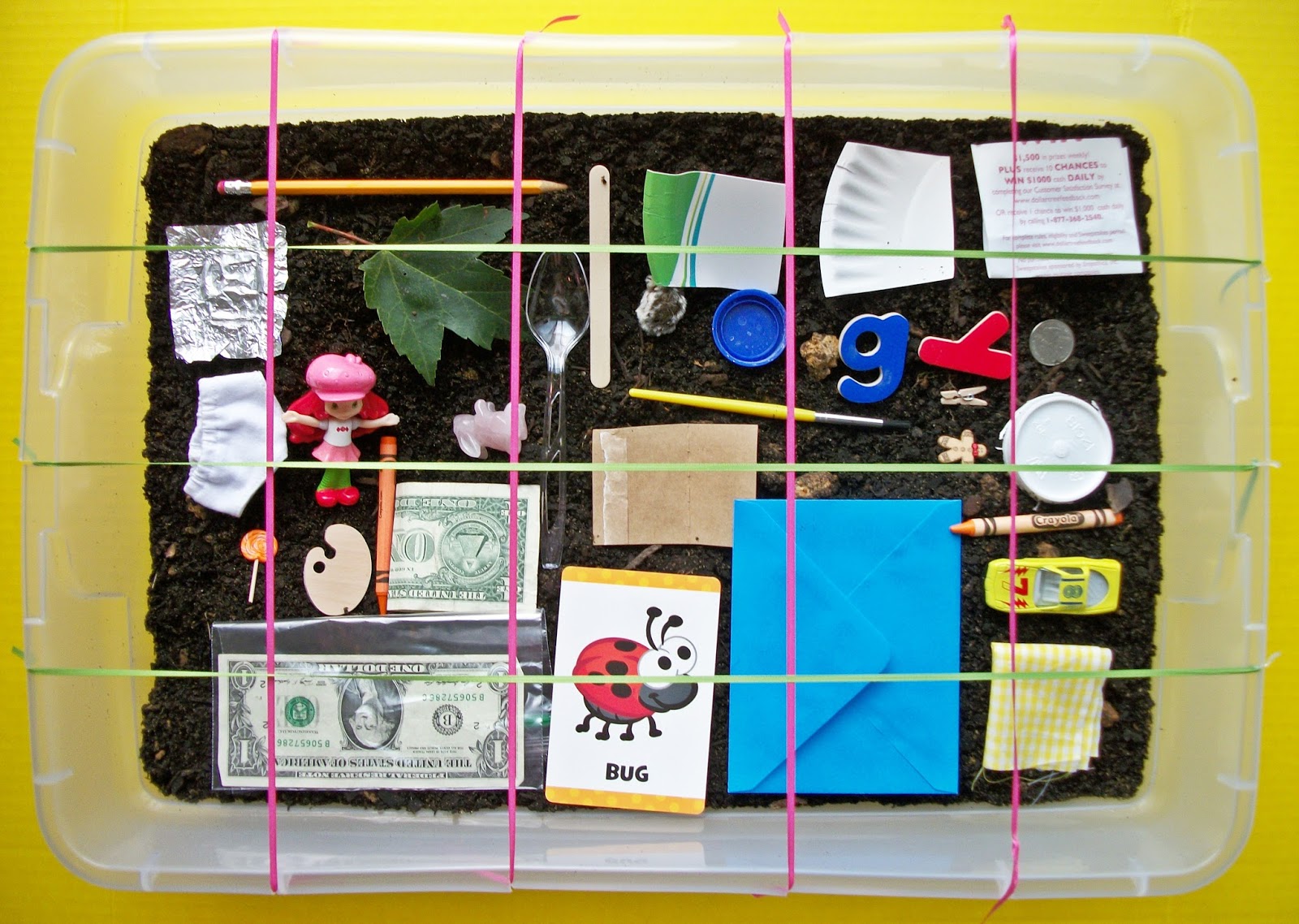
Students will read a grid map to locate and identify objects.
Students will identify and describe various types of soil based on appearance and physical properties.

This activity is designed as a cross-curriculum activity to address the environmental impact caused by the things we use for normal daily living. Students will conduct a year-long decomposition project, culminating with an excavation activity and seasonal planting, just in time for Earth Day in April. Additional, but optional, areas of study include weather patterns, regional climates, sorting materials, daily record keeping, identifying various forms of precipitation, grid and map reading skills, and implementing the scientific process.

MATERIALS:
Plastic tub with lid
Wire snips
Ruler
Awl
String or thin ribbon
Dry soil from the area
Enough gallon size zipper bags to allow one for each student
Various items to place into the tub of dirt of different materials (paper, cardboard, metal, plastic, cloth, glass, etc.)
Rain gauge or plastic container (if project is conducted inside)
Plastic drop cloth for classroom (if project is conducted inside)
Camera

**Additional material requirements will be added as the project phases are added to this blog. Please check back for updates.
INSTRUCTIONS:

For demonstration purposes, the items placed in the decomp tub are geared towards a target audience of first to third grade students.
Preparation:
1. Prior to the activity, prepare the tub by cutting slots at regular intervals across the edges of the tub. These slots will be used to add the rope grid.
2. Using an awl or drill, add several small drain holes at the bottom of the tub. These will simulate natural drainage of many types of soil.

3. Involve the students in the preparation process:
a. Conduct a guided classroom discussion and collection of objects in your school that are made of various materials. Assign a homework project to bring in 2 small objects—one they predict will decompose and one object they predict will not.
b. Have each student bring in 2 cups of soil from their yard in a sealed plastic bag to place into the decomposition tub. Depending upon the size of tub used, you may need to supplement with soil from your yard. A follow-up activity based on this task will be added later in the year.

ACTIVITY:
1. If the project is conducted inside, place the plastic drop cloth on the floor.
2. Sort the items that were brought in by the students by material. If an object is composed of more than one type of material, choose the prominent material for the category.

3. Select the items to be placed into the tub. This step is a great springboard for a discussion on size as not all of the objects will fit into the tub. The goal is to select a sampling of material types. (Plastic, paper, cardboard, metal, glass, Styrofoam, coated paper, etc.) Set the selected items to the side while step 4 is completed.

*It helps to cut some of the larger items to a smaller size to allow room for more objects.

4. Fill the tub half way with the soil that was collected by the students. Mix the soil well with hands or a small shovel.
 
5. Arrange the items on the layer of soil, avoiding overlaps.

6. Add the string or ribbon grid to the tub. This will be used to help locate the items near the end of the project in the spring. Take a photo of the tub with the objects. This photo will also be used for a follow-up activity later next month.
 
7. Carefully add the remaining soil to cover the objects. There should be at least 2 to 3 inches of soil over the objects. If desired, add compass directions to the tub.


8. Place the rain gauge or plastic container outside and wait for the next rainfall. If your summer weather has been anything like ours, you won’t have to wait too long. J
9. Check this blog for the next segment of this year-long project.

Phase 2, AFTER THE RAIN FALLS, will be added in early September.
In the meantime, enjoy your end-of-summer holiday weekend.

Sunday, June 2, 2013

Snow in May?~No Way!


This year our weather on the east coast has been anything but typical. We had many sunny and warm days in January and a heavy frost in mid-May. In parts of New York they received close to three feet of snow on Memorial Day. As Memorial Day is now known as the unofficial beginning of summer, I guess you can say that Sometimes Snow does Fall in the Summer. Yesterday the temps were in the 90s and the humidity turned the air into thick steamy soup.
What a difference a week makes.

However, whether you are experiencing the real snow- fluffy, frosty, and fun, or creating a snowstorm of your own—soft, squishy, or solid, the activity posted today will encourage your little ones to ponder the delights of physical characteristics. Below you will find the second activity from the Sizzling Summer Snow Day.
Activity 2—Snowball Sort and Snow Wall Fort
 

This activity is an extension of the preceding marshmallow sorting activity. It provides a terrific opportunity to explore texture, density, and other physical attributes of common objects found in the home.

Ages: 3-6, with modification

Time to complete: 15-20 minutes

Materials: For this activity, gather various sized and textured round objects in your home that are white or mainly white. Suggestions include—play balls, cotton balls, foam balls, bath scrubbers, rolled socks, home décor, etc. Use your imagination and let your little ones help find the objects with you. You will also need a container that is large enough to hold your collection of ‘snow balls’ and sorting containers. Optional: Flash cards with physical attributes written on them.

Instructions:

1. Gather the objects to sort. This is a great opportunity to reinforce the concept of roundness with the children.

2. Place those objects (the ‘snowballs’) into a container.

3. Ask a child to randomly pull one of the snow balls out of the container.

Ask: Is this snowball hard or soft? Squishy or firm? Heavy or light? Etc. Can you find another snowball that is similar? (Select an attribute for them)?

4. Ask another child to pull out a snowball that is different from the first one. For example, if the first snowball is hard, the second snowball could be soft.

5. Sort the remaining snowballs by the two chosen attributes.

6. Count how many of each type of snowball there is in each pile.


Follow-up Frosty Fort Fun

After completing the snowball sort, play a game of topple the snow fort. This activity reinforces fine motor and gross motor skills as well as teaches children about balance and gravity.

Instructions:

1. Stack 10 foam cups, as shown.


2. Take turns tossing the snowballs from the first part of this activity to knock down the cups.

Ask: Which snowball was the best for knocking down the cups? Why do you think it was the best choice?
Are you ready for a snowball fight, summer style?

Thursday, May 30, 2013

The Temps are in the 90s~Time to Jump into the Deep End of the Pool


Welcome to my first post on Rainbows2Snowflakes. While I definitely know what direction I intend to take with this blog, I will more than likely modify the paths I travel to reach the final destination.
Rainbows2Snowflakes is intended to be a friendly and informative online space to distribute and share ideas for activities, projects, and children’s literature. As we are all forever learners, many of the activities will appeal to a wide audience and age range. However, for the duration of this summer, the posts and ideas will be geared towards children ages four through eight.

Since summer has unofficially begun and the pools are now open, I thought I’d join in with the summer fun and jump right into the deep end of the blog pool with my first activity from The Sizzling Summer Snow Day thematic unit. Over the course of the next few weeks, I will post different ideas and activities from this summer unit. Some of them are easy to do with few materials required and some of the activities are more elaborate and require careful planning. When all activities have been added, I will add a link to the entire unit, just in time for the super sizzling days of July and August.
Activity 1—Sticky Snowman Snowball Sort—Twice the Fun
Marshmallows are such entertaining treats. They squish. They roll. They stick to just about anything. This marshmallow-themed activity will provide both a fun afternoon of learning and play as well as an educational boost for the little ones in your life.
Ages: 3-8
Time to complete: Part 1—15-20 minutes; Part 2—45-60 minutes
Hint: To make sure your children have super clean hands for this activity, instead of singing the usual Happy Birthday song while they was their hands, sing Jingle Bells while they splash in the soap and water. The kids will love singing the Christmas song in the summer and they will have squeaky clean hands when they are ready to dive into the bowl of mixed-up marshmallows.
Materials:
4 nesting bowls
3 small bowls, 1 cup sized
3 bags of marshmallows in 3 sizes (available in big box stores)
Rice Treat ingredients—1 10 oz. bag marshmallows, 3 TBSP butter, 1 tsp vanilla, 6 cups rice cereal
Embellishments: Mini M & Ms, fruit rolls, pretzels, powdered sugar (optional)
Cookie sheet coated with non-stick spray
How big is your marshmallow—Part One
Instructions:
1. Prior to the activity, place the marshmallows in the largest bowl, making sure they are mixed, as shown.
 
2. Arrange the remaining bowls by size from smallest to largest in front of the large bowl.
3. Discuss the sizes of the three types of marshmallows.
4. Sort the marshmallows by size into the corresponding bowl.
 
Make the fun count by counting your snowballs
Use three 1 cup sized bowls and have the children predict how many marshmallows of each size it would take to fill that bowl. Fill the bowls, one at a time, with each size marshmallow. Count the total number of marshmallows it takes to fill the bowl.
Ask: Why did it take more of the small marshmallows to fill the bowl than the other two sizes?
 
Create a Crispy Summer Snowman—Part Two
 
A fun follow-up activity to the marshmallow sort, this activity uses the marshmallows from Part One and continues to reinforce the concepts of comparing items by size as well as counting skills.
Instructions:
Hint: Step 1 should be completed by an adult.
 
1. Create the marshmallow treats.
            a. Melt the butter over low heat.
            b. Melt the marshmallows by stirring them in the melted butter over low heat.
            c. Remove the melted mixture from the heat and stir in the vanilla.
            d. Stir in the rice cereal until coated with the melted marshmallow mixture.
2. To prevent the mixture from sticking to your hands, apply a coating of butter to the palms of your hands.
3. Grab three clumps of the mixture and place them on a cookie sheet coated with non-stick spray, making sure there are three different-sized clumps.
 
4. Roll the clumps into firm ball shapes and allow to stiffen slightly before proceeding to Step 5.
5. (Optional) Roll each of the balls in a layer of powered sugar, leaving a quarter-sized area that is not coated. The uncoated area will be used to help the balls stick together to form the snowman.
 
6. Assemble the snowman by placing the balls from largest to smallest, pressing them together to stick.
7. Decorate the snowman with the candy, fruit roll, and pretzels.
 
Have fun with this activity!