Monday, September 22, 2014

AUTUMN, CHANGES, & BUTTERFLY BATIK

Change—New Paths—New Directions

While most of us realize that in order to grow we must step out of our comfort zone and explore new paths in life. However, recognizing the need to change directions and actually taking that first step are often at opposite ends of the spectrum. Many times we need a nudge to help us take that first step. For me, the nudge came in the form of a major health setback. I was forced to make choices that I preferred not to make. Yet, now that I can look back at the footprints I have left on that new path, I realize that my change in direction was a good choice to make.

Since the beginning of 2014 my blog posts have become less frequent. In fact, for several months I did not even add a new post. I apologize for the lack of new educational ideas and activities during this time. I have come to the conclusion that for the remainder of 2014, I must devote my time to my family, my health, and personal commitments. Trying to juggle all of those needs with maintaining this blog was not in the best interest of my family, my readers, and my health. I intend to return to this blog in 2015, hopefully renewed and revitalized. In that time, please remember that monthly activities and ideas that I posted in 2013 and early 2014 will still provide creative suggestions for making learning fun and memorable.

My final blog post for 2014 fits in perfectly with my decision to journey down a different path for a while. Mother Nature is on her own path to change with the turning of the seasons. While pictures, books, classroom decorations, and the like lead us to believe otherwise, the transition from one season to the next is anything but sudden. For weeks in our area summer has been fighting to maintain its hold on our region. In fact, during the first week of September we had record breaking temperatures. Our usually wet month of September has been dry. Yet, each morning, there is a glimmer of hope that the cooler autumn weather is winning the battle of the seasons. Spiders are capturing the dew each morning and now spinning the spectacular webs that are synonymous with fall. Moths and butterflies are hastily slurping the last of the nectar from the fading blossoms of summer. Caterpillars are beginning to stake their claim to their sleeping grounds to ride out their transition to new creations—moths and butterflies that will emerge in the spring.

Summer to autumn
Autumn to winter
Winter to Spring
Spring to Summer

The endless change of directions that nature takes is a reminder to all of us that to grow we must change, even if the change may not be as easy as we’d like.

As my final educational activity for 2014, I have chosen a craftivity centered on what I believe are the ultimate examples of change—butterflies. From the moment they hatch into a tiny caterpillar until the time comes to settle into a deep metamorphic slumber, butterflies are nature’s example of how trust in change can result in beautiful creations. When a butterfly lays her eggs, not knowing if her efforts will succeed, she trusts that the leaf, the branch, or the seedpod will provide for her young offspring. The caterpillars emerge and forage for weeks, trusting that food will be readily available. They grow and shed one casing after another, trusting nature to protect them during each transition. Then, the caterpillars trust nature once again to protect them as they spin their protective chrysalis and finally emerge a magnificent winged creature.

The activity below provides children with an opportunity to demonstrate how change (addition of paint to a crayon resist background) can yield beautiful results.
Beautiful Butterfly Batik*
Objective: Children will learn the traditional method of batik (hot wax resist), but use that information to create a variation of the method—crayon batik.

Materials:
Crayons with fine points
Sturdy paper or cardstock
Diluted tempera or acrylic paint
Large bowl
Optional: butterfly template (provided)
Plain newsprint or screen mat for drying


Procedure:
Preparation: Prior to conducting the activity, pour a small amount of paint into a large bowl. Dilute the paint with water so that there is ample pigment in the water, but the paint is now the consistency of water. This will be used as the paint bath to dye the crayon artwork.


1. Show your children pictures of traditional batik (Hint: an internet search will provide some excellent examples).
2. Discuss the process for creating traditional batik.
A. Paint melted wax on fabric.
B. Dye the fabric a light color and allow to dry. The dye will resist the fabric that is coated in wax.
C. Add more melted wax. Repeat the dying process.
D. When the last dye has been added and dries, the wax is melted from the fabric, usually with a hot iron.
The result is a design with bold colors and lines that crisscross the colors where the wax cracked during the dying process.
3. Ask the children to use the crayons draw a block style picture of a butterfly or moth, encouraging the children to use large shapes with small spaces in between. It is important that the crayons completely cover each shape with a thick layer of wax.
 
 
4. Fold and crinkle the paper into a ball.
 
5. Unfold the paper and briefly dip it into the bowl of diluted paint. (Hint: younger children may need to be reminded that if their artwork is allowed to remain in the paint too long, the paper fibers may become weak and tear.)
 
 
6. Place the artwork on a flat surface to dry.


The faux batik butterfly artwork is a combination of different mediums that can represent the change of the seasons. When the children look at their completed artwork, ask them to find the small lines of paint that worked their way into the blocks of crayon wax. Explain that these lines can represent the days where our seasons are a mixture of two seasons—for example, very hot days in September that begin chilly with a heavy dew coating the windows and plants.

*I originally created this activity for a wonderful web site that focuses on teaching children the wonders of nature and how butterflies are wonderful ambassadors for nature’s ability to grow and change. Please check out their site for more activities and information about butterflies.

Kids Butterfly dot Org

Thursday, May 29, 2014

A Blog's Anniversary When Life is Just Ducky


One year. Wow! It is quite difficult to believe that a year has passed since I posted my first blog entry. Throughout that year, my blog has served as a reflection of my hectic schedule. When life had been just ducky, my blog posts were frequent and overflowing with activities. However, as I am sure you are aware, spare time is a fluid entity—Some months I had enough, some months, well, not so much. It seems as if my spare time since the end of January has disappeared along with the frigid temps of the winter. Therefore, my blog posts have become less frequent.
Last week, however, I did manage to devote some time to an afternoon of fun with a friend by visiting a 40 foot tall (YES, I did say 40 foot tall) rubber duck that casually bobbed up and down in the Hague in front of the Chrysler Museum in Norfolk, Virginia. My friend and I were not alone. There was a school group, a gathering of locals, curious out-of-towners, even a group of folks dressed up like the Statue of Liberty—all with cameras in hand.

Up until then, I had some trouble coming up with a special topic for my 1 year anniversary blog post. When I saw the giant rubber duck, however, my problem was solved. After all, who doesn’t love a rubber duck?!
First, a little background on the giant rubber duck—
The giant 40 foot rubber duck was created by the talented and outside-the-box pioneer Florentijn Hofman. He crafted his piece of whimsy in 2007. Since its first appearance in the Netherlands (Hofman’s home), the duck has traveled the world. To date, the duck has only appeared in 2 U.S. cities—Pittsburgh, PA and Norfolk, VA.
Hofman’s creation depicts our connection to each other (After all, ducks do float on water—which flows from city to city, country to country, and continent to continent) as well as inspires a sense of joy and return to childhood.
So, as Hofman intended, I decided that it’s time for some rubber ducky fun!
Given the enormous size of the duck, I decided to create an activity that focuses on size comparison. Rubber ducks in various sizes can be used to compare sizes, discover and discuss the concept of water displacement, and discover and discuss the buoyancy of an object (i.e. A duck filled with air should float. What will a duck filled with water do?)
A Rubber Duck CAN Float—But What If It Doesn’t? 
 
This easy-to-complete activity demonstrates the concept of buoyancy and water displacement as a way of identifying the volume of an irregularly shaped object.
 
Materials Needed:
Rubber ducks in various sizes
A bowl large enough to cover the largest duck with water
Water
A crayon or wax marker
Tape
Printout of ducks
2 water balloons—one filled with water, one filled with air
Adhesive dots
 

Directions:
1. Show the ducks to the children. Discuss how they are different (size, shape, etc.).
2. Place the ducks in order from smallest to largest.
3. Place a piece of tape to cover any holes in the ducks to keep water from seeping inside when they are immersed in water.

4. Add water to the bowl, leaving at least 1 inch unfilled.
5. Use the crayon or wax marker to mark the water line on the bowl.

6. Beginning with the smallest duck, hold the duck upside down and push it into the water. Observe how the water level changes. If possible, use the crayon to mark the level of water on the side of the bowl.

Hint: for the smallest duck, there will be little observable change.
7. Repeat for each duck, marking the side of the bowl when each duck is immersed in the water.
8. Discuss why it was hard to see the change in the water level when the small duck was under the water, but much easier to see the change when the large duck was under the water.
9. Show the picture of Florentijn Hofman’s duck to the children. Discuss how much water would be displaced (spilled) if that duck was pushed into the water. (See Link Above)
10. Discuss why the ducks had to be pushed into the water (The ducks are filled with air). Use the 2 water balloons to demonstrate by placing them into the bowl of water. The balloon filled with air will float. The balloon filled with water will sink.

Follow-up FUN:
Use the printout of the ducks to demonstrate the concepts of area and size comparison. Use the dot stickers to cover the ducks as much as possible without overlapping the dots. Count how many dots it takes to cover each duck. Discuss how many dots it would take to cover Hofman’s duck.


Use your imagination and create an afternoon of learning fun with your little ones—rubber ducky style!
 

In celebration of the first anniversary of my blog, I’m hosting a very special giveaway. This giveaway includes a numbered and signed rubber duck designed by Florentijn Hofman and a $20.00 Amazon gift card to purchase your own set of ducks (The other ducks pictured came from Amazon) or any other treat that you could use for some fun activities with the kiddos.

*This giveaway will include a signed and numbered souvenir rubber duck (a $22.00 value) from the Chrysler Museum and a $20.00 Amazon gift card sent via email to the winner. The registration will last from the posting of this blog post until midnight, June 13, 2014. One winner will be randomly selected from all entries. The rubber duck and gift card will be shipped within approximately 2 weeks following the close of the giveaway. The giveaway is open ONLY to residents of the United States with a United State’s mailing address. The winner’s name will be posted on the blog, unless the winner chooses not to have his/her name posted.

To enter the contest the entrant must post a comment on this blog as well as submit an email address through the contact link on the blog’s home page. The winner will be contacted via email at the close of this giveaway. The winner of the contest must reply to the contact within 72 hours. An alternate winner will be selected in the event that the initial winner does not respond within the 72 hour time frame.


This blog post has been shared on the following blogs. Please check them out.


The Squishable Baby dot Com


Lovely Commotion dot Com


Giveaway Update


Congratulations to Lisa for winning the giveaway in celebration of the one year anniversary of this blog.


Wednesday, May 14, 2014

Fancy Schmancy Words-Embrace or Avoid as Children's Book Week Continues

Fancy Schmancy Words—Embrace or Avoid?

When choosing books for the younger readers in your life, how do you select the reading material? Do you choose books with a formula based on phonetic patterns? Do you seek books with that utilize mainly CVC and leveled high frequency words? Or, do you embrace books that have words that are a bit edgy, unfamiliar, and describe outside-the-box concepts?

Tyrannosaurus
Pinkalicious
Transformers
All of the words listed above qualify as words that are NOT high frequency words or the typical CVC words that often come to mind when choosing early reading material. They contain difficult letter combinations, are unique, and contain multiple syllables. Yet, many if not most children in their early stages of reading can probably tell you what those words are—in or out of context. So begins the debate. Is a phonetic approach to reading best or should children be presented with reading material that focuses on use of context and picture clues? In reality, the best approach may be a combined approach. Debates will always continue on this subject. However, remember that in order to raise avid readers that can devour books as fast as they devour a slice of watermelon on a hot summer day—we must encourage budding readers to expand their reading vocabulary by presenting material that includes words that POP off of the pages.
 
 
When my oldest son was a mere toddler, he would sit for hours listening to and ‘reading’ stories that contained what I refer to as Fancy Schmancy words—words that bring a story to life, with or without the illustrations. Stories that have these types of words sprinkled across the pages are the stories that kids remember. (Dr. Seuss, what is a vug anyway? J)
For example, which sentence is more interesting?
When the balloon popped, the children ran away in different directions.
OR
When the balloon burst, the children scattered.
The second sentence is shorter, but paints a more vivid picture for the reader—no illustration required.
If your child selects a book with words that are unfamiliar, there are many ways to help your child add that word to their reading vocabulary.
1. After you finish the book with your child, go on a fancy schmancy word scavenger hunt to identify new and interesting words.
2. Act out the words that you and your child have identified. Example: Once a child sees a dripping, runny, scoop of ice cream plop onto a hot sidewalk, they will definitely remember the meaning of that word.
3. After your child acts out the words, have your child tell another child what that word means, in their own words. Learning the formal definition  of a word is much different than attaching a personal meaning to that word.
4. Illustrate the new words. This activity not only helps the child locate a word in text, but also taps into his or her imagination as well as practice fine motor skills.
Below are some examples of attaching a visual meaning to an unfamiliar word.


So, as Children’s Book Week (May 12-18) continues, please remember to select books that will be fun, memorable, and stretch the vocabulary of the young readers in your life.
For the record, I’d choose Fancy Schmancy.

Sunday, May 11, 2014

CHILDREN'S BOOK WEEK~ Celebrating Children's Literacy

Happy Children’s Book Week!
(May 12-18, 2014)
The countdown to Children’s Book Week is nearing its final hours. Excitement is building.
One of the longest running efforts to encourage and promote children’s literacy, Children’s Book Week is eagerly anticipated by children, parents, grandparents, aunts, uncles—you name it. Since it’s first week in 1919, Children’s Book Week has reminded us that a nation of readers is a nation that will continue to move forward.

Click this link to see if your area is holding any special events for this important week that shines a light on children's literacy.

In celebration of this event, I am adding a quick recap of some reviews posted over the past year of some fantastic examples of children’s literature. Each title will take you to a link of that post—a year in books, as it were.

It’s a Firefly Night by Dianne Ochiltree

My Father is Taller than a Tree by Joseph Bruchac

When a Dragon Moves In by Jodi Moore

Adventures at Walnut Grove by Dana Lehman

Pumpkin Circle by George Levenson

Welcome Comfort by Patricia Polacco

Quiet Bunny’s Many Colors by Lisa McCue

In addition to this, my ebooks that are currently available on Amazon are available as a free download on Monday, May 12 and Tuesday, May 13.

When Violet was Blue—for children ages 3 through 6

Sometimes Snow Falls in the Summer—for children ages 5 through 8

So, instead of reading a lengthy blog post, grab a good children’s book (or 2 or 3), find a comfy spot to sit with your children and—Read, Read. Read!

Thursday, May 1, 2014

Yay for Spring! GARDEN SONG / PETE SEEGER


Yay!
The APRIL
showers have brought the May flowers!
Take
some time this week to stop and smell the flowers~ALL of them!


Thursday, April 3, 2014

Spring, Bunnies, Rainbows, & Easter~What Could Be Better?

I can happily report that spring has definitely arrived on the mid-Atlantic coast. Signs of spring are everywhere—from the bluebirds that are busily creating their nests, to the flowers popping up from the still-frosty ground, to the trees that look as if their branches are ready to burst. Spring is my favorite season, ushering in the opportunities to renew just about everything.

For Quiet Bunny, the adorable creation by Lisa McCue, the same is true. Quiet Bunny loves spring. And, as Easter falls this month, I decided to offer a review of Quiet Bunny’s Many Colors—a book perfect for spring AND Easter!
QUIET BUNNY’S MANY COLORS by Lisa McCue
From yellow to green and from blue to red—Quiet Bunny loves all of the colors of spring. Yet, poor Quiet Bunny becomes sad when he thinks that his brown and white fur is not a color of the season that he loves so much.

Quiet Bunny sets out on a mission to become one-with-spring by adorning himself with nature’s offerings of the season.
He tries dandelions.
He tries lily pads.
Quiet Bunny even tries a good coating of red clay.
Nothing works.

Just about the time that Quiet Bunny is ready to give up a wise owl steps in and helps Quiet Bunny realize that he is indeed the color of spring!
In Quiet Bunny’s Many Colors, Lisa McCue, author and illustrator, presents a heartwarming tale of acceptance of oneself. With vivid splashes of color, McCue’s illustrations will definitely create a lasting memory of this very important message. Her clever way of transitioning from one event to the next also provides an opportunity to discuss sequencing and story plots.
As an added bonus, McCue tucks little surprises on each brightly colored two page spread that will encourage children to explore the world around them. Children will delight in finding each plant and animal that represents the color that Quiet Bunny is attempting to mimic.

Bunnies, nature, bright colors, and acceptance of our many differences—Quiet Bunny’s Many Colors is the perfect way to usher in the season of new beginnings.

Word Count: 609
Average words per page: 20
Recommended Age: 3-6-years-old

Added bonus: Great for color recognition, identifying items from nature, and lessons on acceptance, FABULOUS illustrations!


Click here for a link to Lisa McCue's story-Quiet Bunny's Many Colors


Fun Printables to Teach Color Recognition and Sequencing


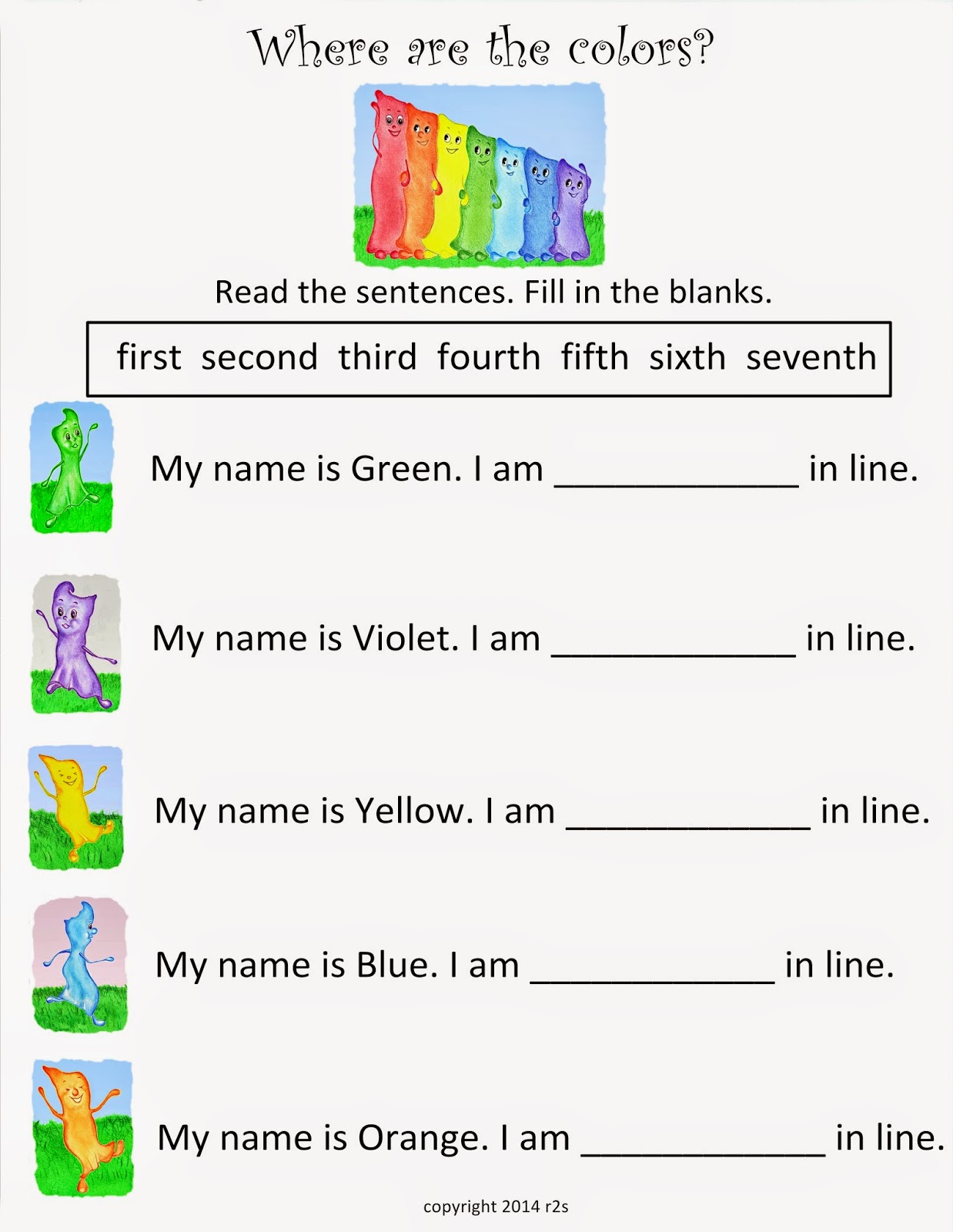
If you are seeking additional resources to teach and reinforce color recognition, my newest book When Violet was Blue, available as an ebook on Amazon can easily fit the bill. The simple drawings and bouncy tale will help your little ones learn and remember the colors of the rainbow.
The image below will lead you to a link of the ebook. This book even features the text-to-speech option so that your little ones can ‘read’ the story all by themselves.
 
http://www.amazon.com/When-Violet-Was-Blue-Troehler-ebook/dp/B00JAN76PK/ref=sr_1_1?ie=UTF8&qid=1396529609&sr=8-1&keywords=when+violet+was+blue
Link to ebook on Amazon


Monday, March 10, 2014

RAINBOW Fun for St. Patrick's Day

Here on the east coast, the winter has definitely been long. Students in our area missed nearly 3 weeks of school due to snow, ice, wind—you name it. That’s why I am especially looking forward to St. Patrick’s Day this year. The holiday doesn’t always attract much attention. However, with the sea of green from a St. Patty's Parade and the rainbows that signal the end of a storm, St. Patrick’s Day seems to be the perfect holiday to usher in a spring-thinking state of mind.

The post for today deals with the wonders of a rainbow and a quick list of activities that you can use to reinforce math skills as well as color identification.
So, print the printables and have some rainbow fun.

RAINBOW STICKS
This printable is great for teaching color concepts, ordering of sizes, and non-standard measurement (How many red strips long is the table?)

Suggestion: Print the color sticks on card stock. If you decide to use these to teach fact families, cut off the white end of each stick.
RAINBOW BRICK COUNTING STICKS
 
This printable is great for teaching addition basic facts, comparisons, and matching.
Suggestion: Print the color sticks on card stock. If you decide to use these to teach fact families, cut off the white end of each stick to more easily align each stick.

RAINBOW ADDITION
 
Create your own rainbow with pipe cleaners or wax-coated yarn to demonstrate differences in diameter.


If you are looking for a fun story that teaches colors, positional words, and the concept of teamwork to the kiddos, check out the link below to my latest story for children ages 3 through 6.


http://www.amazon.com/When-Violet-was-Blue-Troehler/dp/149612958X/ref=sr_1_1?ie=UTF8&qid=1398776065&sr=8-1&keywords=when+violet+was+blue
Link to Book and eBook on Amazon.com

Most importantly, have some RAINBOW FUN.
Happy St. Patrick’s Day!

This post was shared on the following blog. Please check them out:

The Kennedy Adventures dot Com